
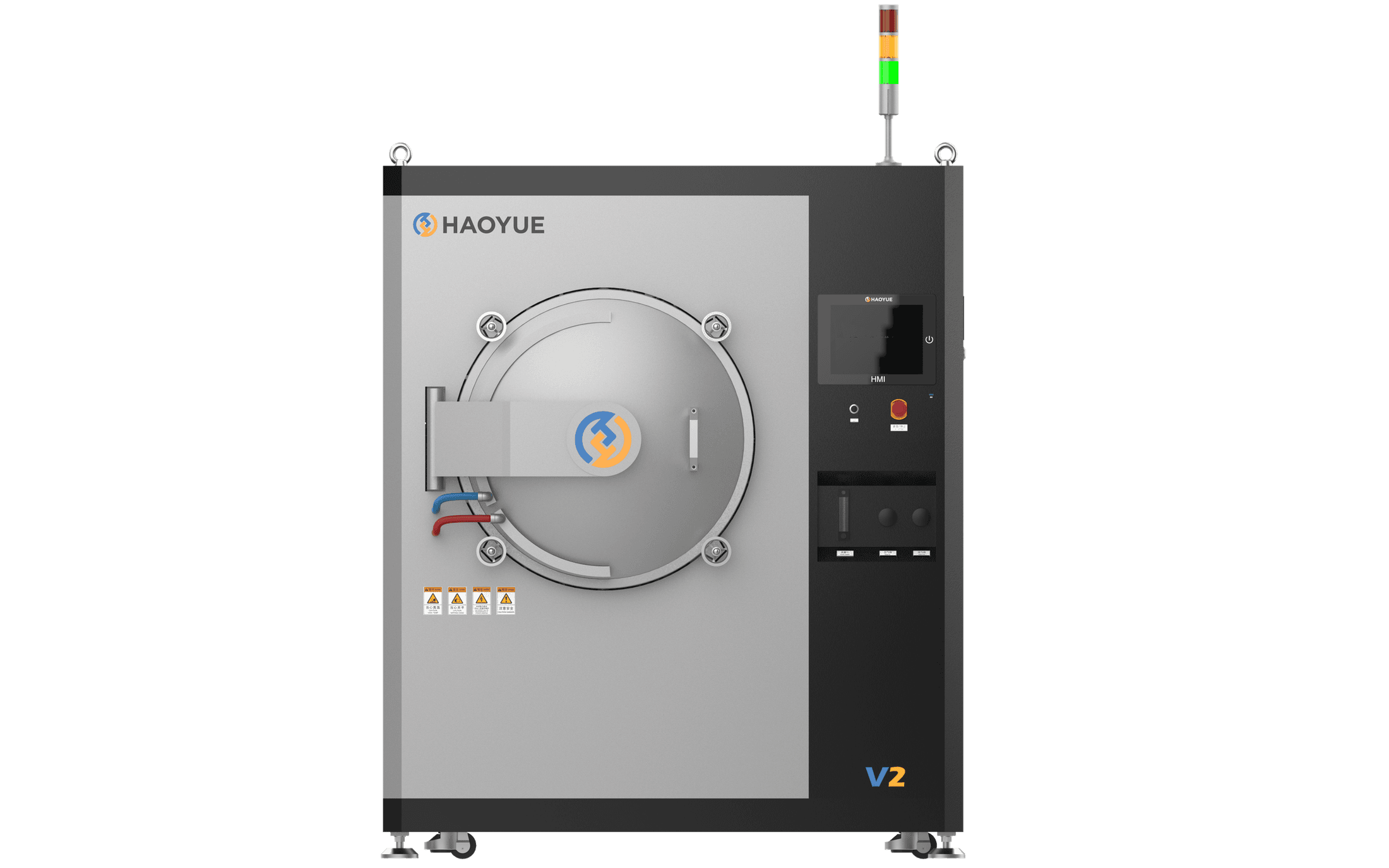
Vacuum Furnace
V2 Vacuum Furnace
V2 technical proposal data imported from the Word document for product review and inquiry routing.
This vacuum graphite furnace is a resistance-heated vacuum furnace using high-purity graphite as the heating element. Under vacuum conditions, heat is generated by the resistance of the graphite, producing high temperatures within the furnace chamber, which are transferred to the materials by thermal radiation.
Key Features
Technical Highlights
Highly Integrated Design: Horizontal, side opening door, integrated structure design optimizes material loading and unloading accuracy, ensures convenient operation, allows flexible equipment movement, and significantly improves efficiency and space utilization.
Efficient Heating and Cooling Capacity: Rapid heating: Heating from 10C to 2000C requires only 20 minutes (average heating rate: 100C/min), reducing process time by 50%-70% compared with conventional equipment and significantly lowering energy consumption.
Rapid cooling: Cooling from 2000C to 50C requires only 387 minutes (average heating rate: 5.04C/min), significantly improving equipment turnover rate.
Optimized Thermal Field Design: The heating chamber is designed through thermal simulation calculation to ensure temperature uniformity. Modular heating elements combined with a high-efficiency thermal insulation layer are adopted to reduce heat loss and improve the energy efficiency ratio.
Excellent Temperature Uniformity: After holding at 1000C for 1 hour, five-point temperature measurement is conducted in the constant temperature zone, and the temperature uniformity reaches +/-5C, ensuring stable sintering quality of materials.
Multiple Safety Protections: HMI + PLC + PID pressure control system enables real-time monitoring and adjustment of process parameters. Multiple safety interlocks are implemented to prevent abnormal conditions such as overpressure and overtemperature, ensuring the safety of both equipment and personnel.
Energy-Saving and Environmental Protection Advantages: Rapid heating and cooling combined with high-efficiency thermal insulation can reduce electricity/gas consumption by more than 20%. The low leakage rate design reduces the waste of protective gas and lowers operating costs.
Wide Applications: With the advantages of high integration, precise temperature control, high safety and energy conservation, this equipment is an ideal choice for the preparation of high-performance materials. It is widely used for high-temperature sintering of ceramics, cemented carbides, composite materials, etc., under vacuum or protective atmosphere. It can also be used for high-temperature heat treatment of metal materials under high vacuum conditions or degassing treatment of precious metal materials.
Selection guide
Confirm the process window before quotation.
For faster engineering review, prepare the core process boundaries before sending an inquiry.
Can the chamber be customized?
Yes. Chamber size, heating zone, fixture, pressure, and atmosphere configuration should be confirmed through technical review.
Is a process test recommended?
For new materials or demanding density targets, a sample process discussion helps reduce equipment selection risk.
What should be sent with an inquiry?
Material, target temperature, pressure or load, atmosphere, workpiece size, and expected capacity are the most useful inputs.
Typical Applications
Related products
Review similar furnace options.
Vacuum Furnace
Vacuum Furnace
A versatile thermal platform for sintering, annealing, degassing, brazing, and heat treatment processes.
Gas Pressure
Gas Pressure Sintering Furnace
Supports pressure atmosphere sintering for materials that require controlled gas pressure and stable thermal processing.
Diffusion Bonding
D2 Vacuum Diffusion Welding Furnace
Diffusion welding refers to a solid-state welding method in which workpieces are pressed under high temperature without visible deformation or relative movement. This process is particularly suitable for joining dissimilar metal materials, heat-resistant alloys, ceramics, intermetallic compounds, composite materials, and other new materials. Especially for materials that are difficult to weld using fusion welding methods, diffusion welding has obvious advantages.
Gallery And Media
Review product images, equipment details, and available media before sending a technical inquiry.
Equipment Video
Equipment overview videos and process demonstrations are available on request when a public video is not yet attached to this product page.
Technical Downloads
V2 Vacuum Furnace Inquiry Sheet
Prepared from the imported Word technical proposal.